
Interactive science simulations
Explore free interactive simulations of geography, planets, eclipses, weather, and physics. Adjust the controls and see the results in your browser.
- Tools
- 28
- Shelves
- 6
- Scale range
- 10⁻¹ → 10¹⁴ m
- Price
- Free
10⁻¹ m → 10¹³ m
From a bowl of clay to the edge of a black hole
Every tool, pinned to the size of what it measures. Hover a pin to preview it; each step right is ten times larger.
01 / 06
Maps & Earth
Projections, borders, and the real size of places.
4 tools
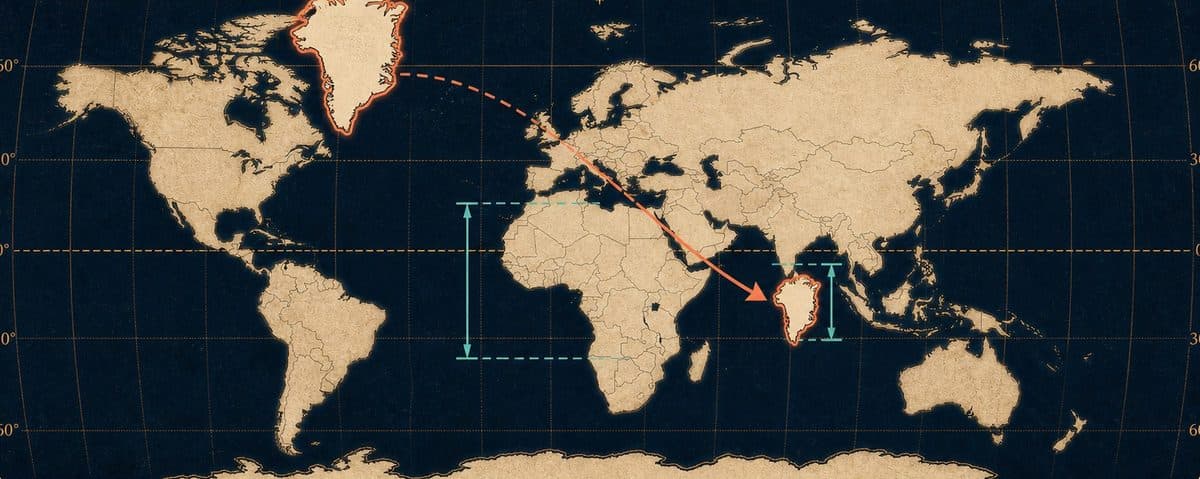
True Size World Map
Move Greenland, Russia, and other countries toward the equator to compare their real areas with Mercator's apparent scale.
10⁶ m · 2,600 km (Greenland)
Open the simulator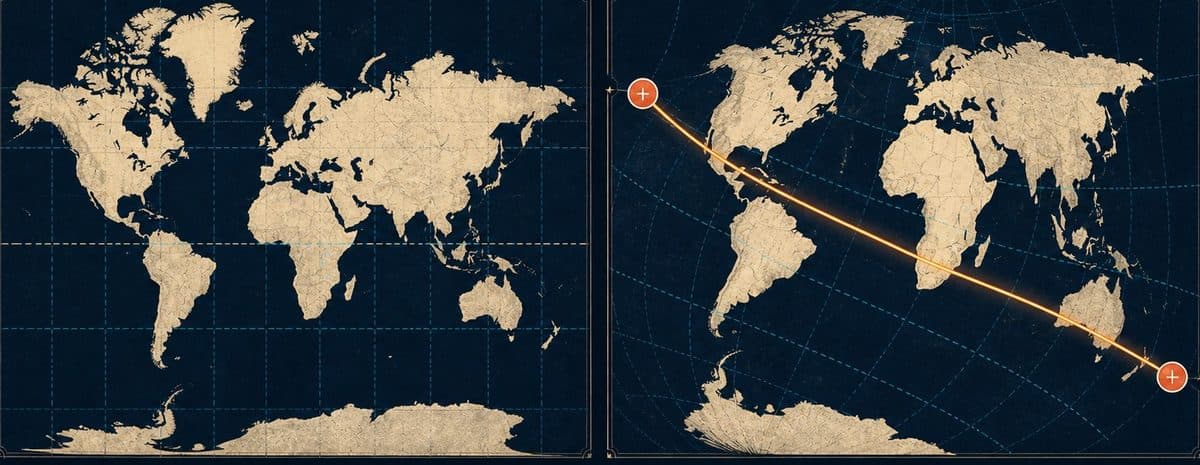
Custom Mercator Projection
10⁸ m · 40,075 km (the equator)
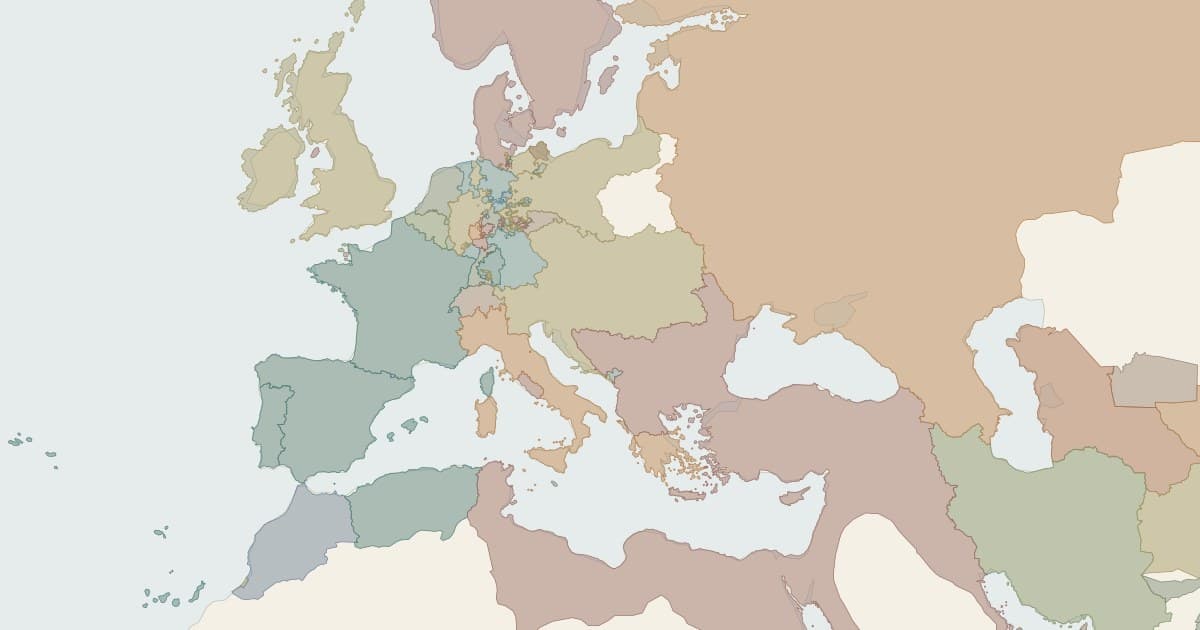
Interactive World History Map
10⁷ m · ≈ 5,000 km (empires)
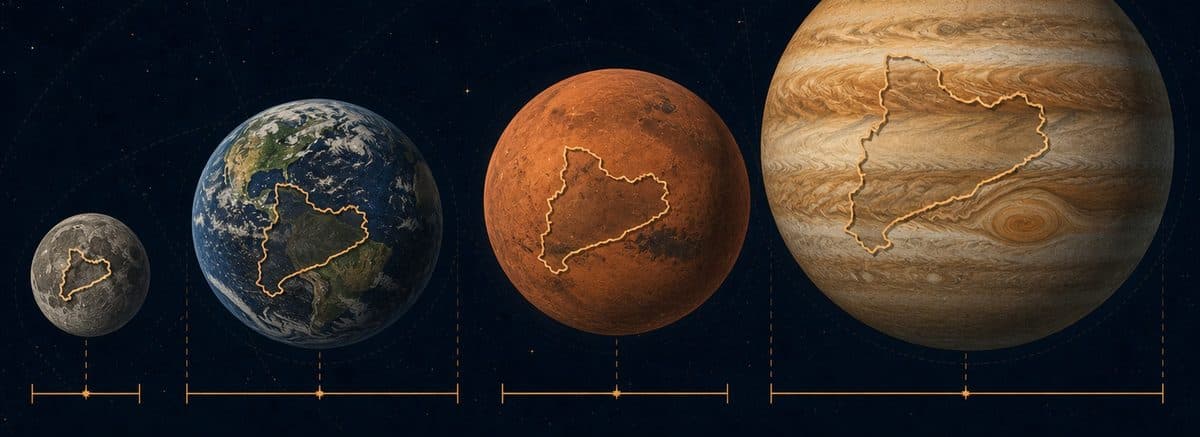
Country Size on Planets
Compare countries on a true globe, then place them on worlds across the solar system.
10⁸ m · 139,820 km (Jupiter)
02 / 06
Water & Climate
Raise the sea, flood a city, fill another world.
5 tools
 New
New3D Flood Simulator
Send water through real Japanese neighbourhoods. Change its height and direction, and watch buildings and terrain guide the flow.
10³ m · ≈ 2 km (city blocks)
Open the simulator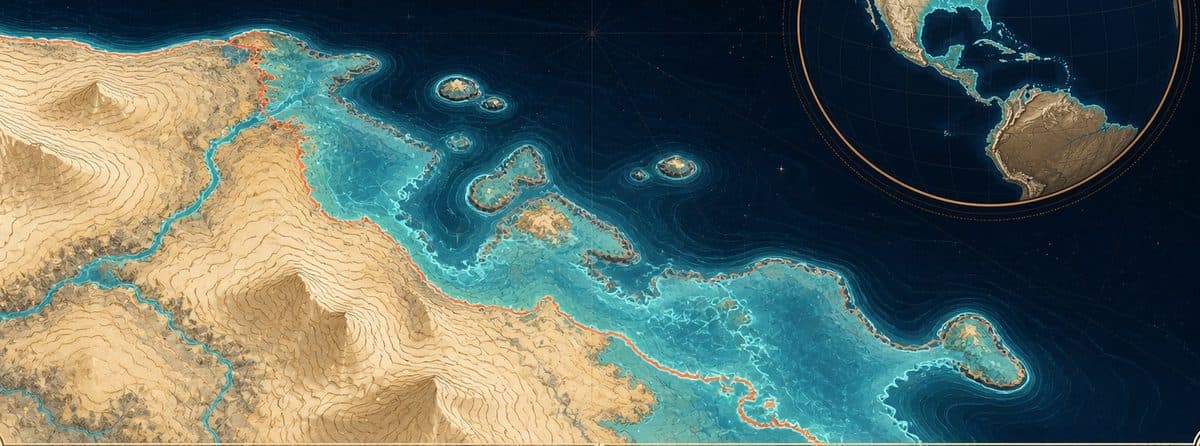
Sea Level Rise Flood Map
10⁷ m · 12,742 km (Earth)
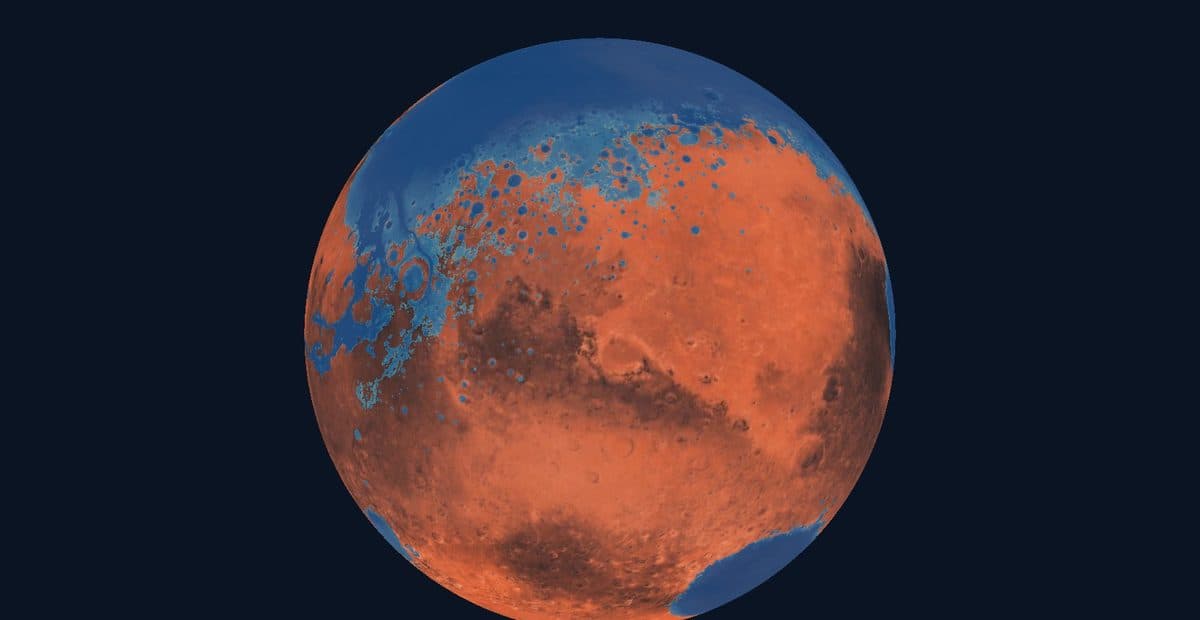
Mars Sea Level Simulator
10⁷ m · 6,779 km (Mars)
 New
NewVenus Simulator
10⁷ m · 12,102 km (Venus)
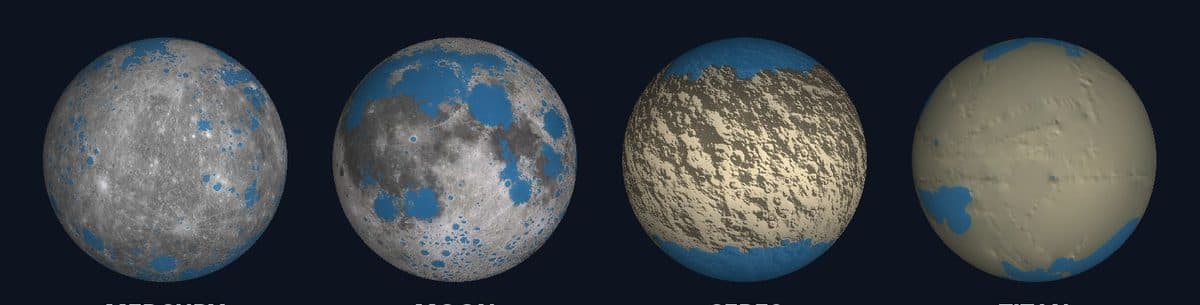
Waterlines on Other Worlds
10⁷ m · 3,474 km (the Moon)
03 / 06
Storms & Impacts
Trace tornadoes and model what an impact leaves behind.
3 tools
 New
NewTornado Archive
Explore the Tornado Archive with an interactive map of historical tracks. Filter events by date and strength, replay outbreaks, and download tornado data.
10⁵ m · ≈ 100 km (storm tracks)
Open the simulator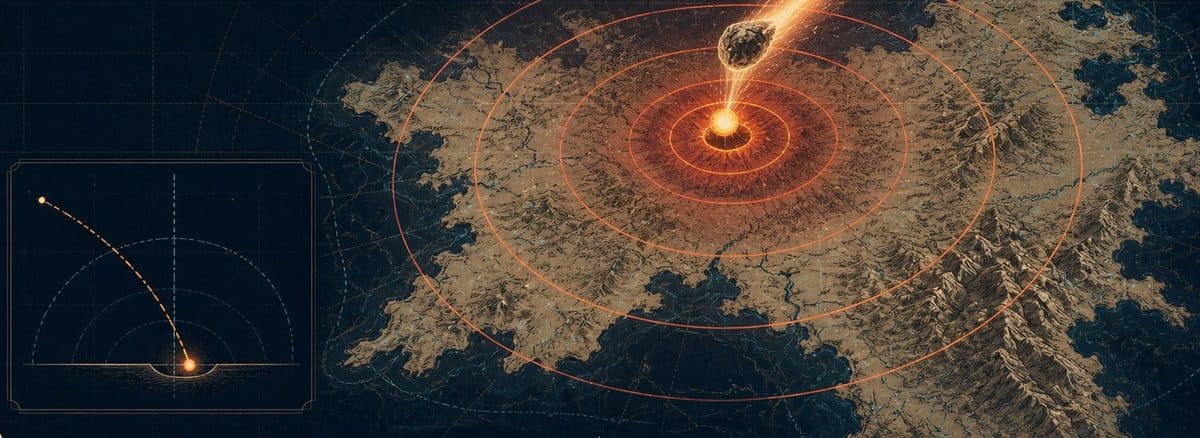
Asteroid Impact Simulator
Set an impactor's size, speed, angle, and material to map its estimated effects.
10⁵ m · ≈ 200 km (impact effects)
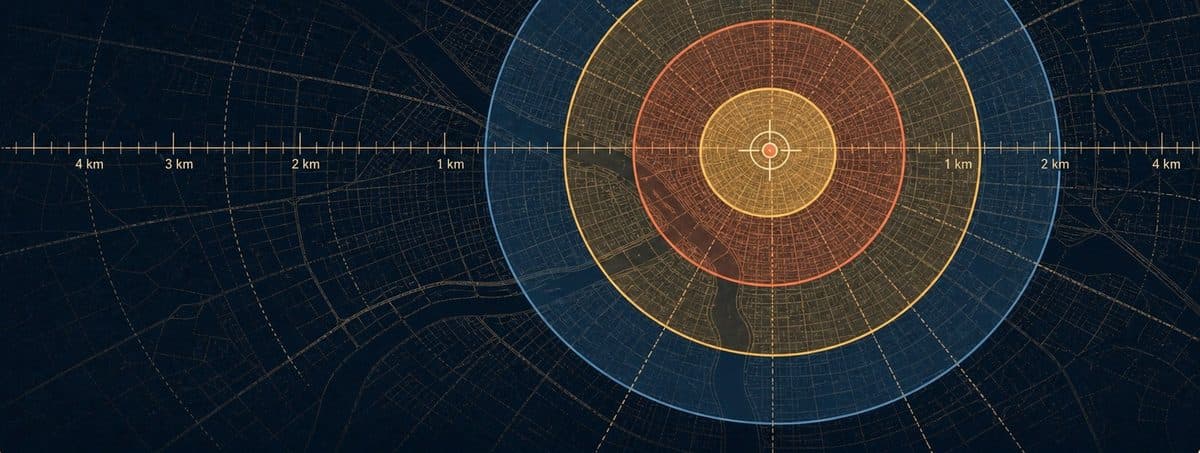
Nuclear Blast Radius Map
Compare blast, thermal, and radiation zones for different yields and burst types.
10⁴ m · ≈ 10 km (blast rings)
04 / 06
Sky & Eclipses
The Moon, the Sun, and the shadows they cast.
6 tools
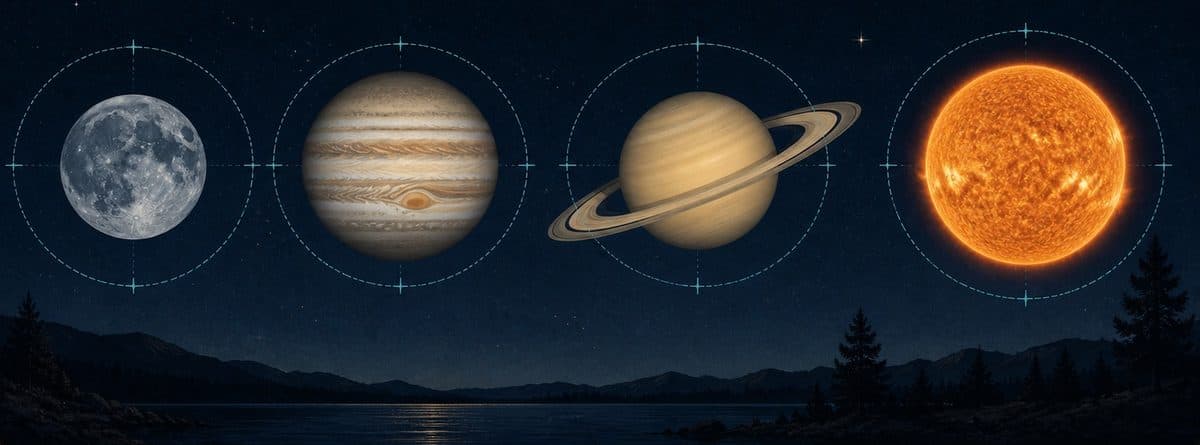
Moon Replaced by Planets
See every planet at its true angular size if it appeared in place of the Moon.
10⁹ m · 384,400 km (the Moon's distance)
Open the simulatorMoon Phase Simulator
10⁹ m · 384,400 km (Earth to Moon)
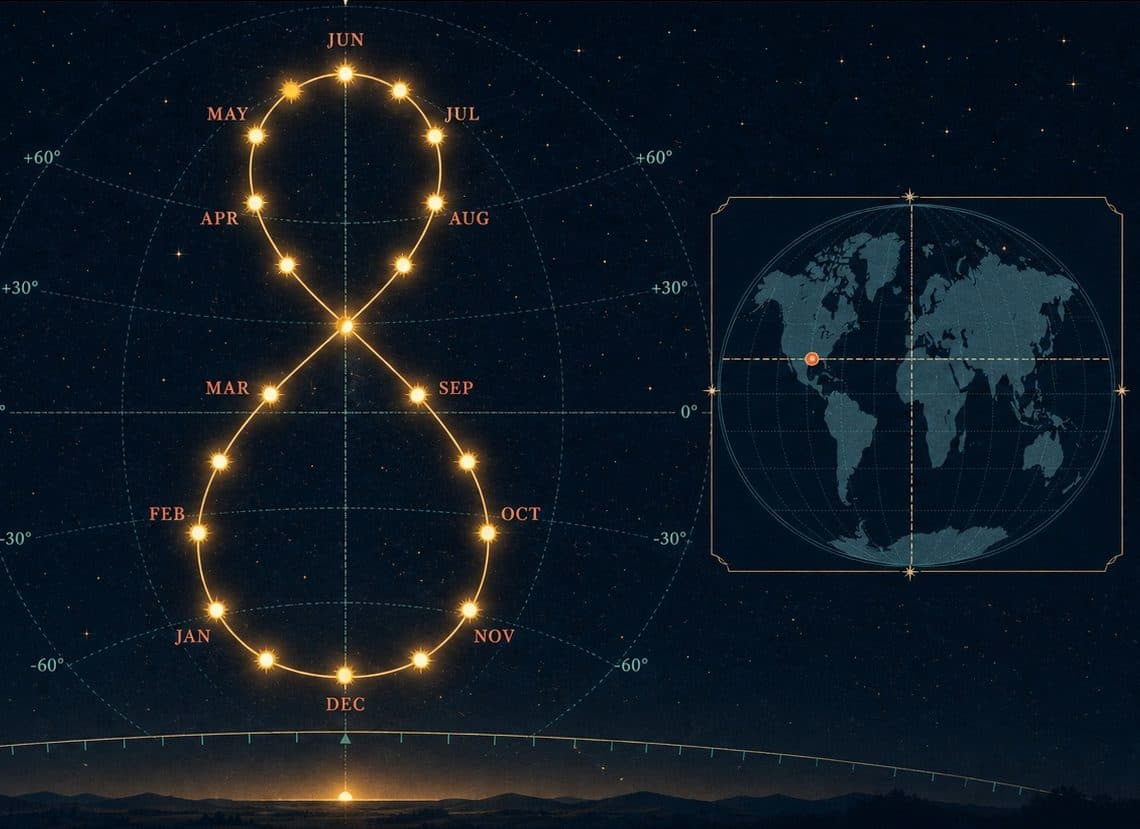
Why the Sun Draws a Figure 8
10¹¹ m · 1 AU (Earth's orbit)
Eclipse Calendar & Countdown
Every upcoming lunar and solar eclipse through 2028, with a live countdown and times in your timezone.
10¹¹ m · 1 AU (eclipse geometry)
Lunar Eclipse Visibility Map
Map where the Moon is above the horizon throughout upcoming lunar eclipses.
10⁹ m · 1.4M km (Earth's umbra)
Solar Eclipse Path Map
Follow the live partial-eclipse footprint and complete totality or annularity path.
10¹¹ m · 150M km (Sun to Earth)
05 / 06
Orbits & Space
Satellites, planetary loops, and a black hole's shadow.
3 tools
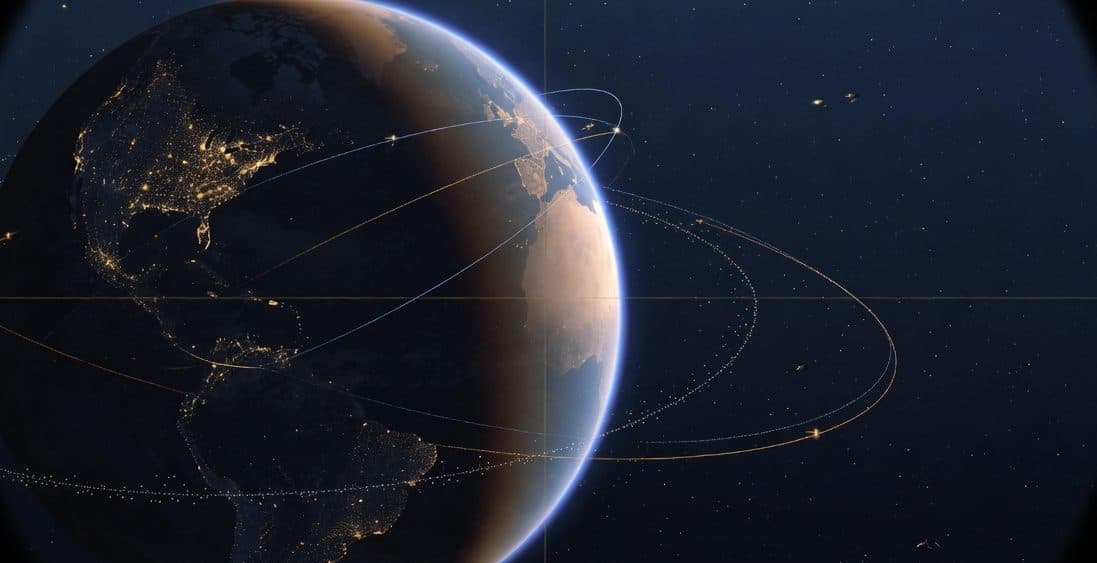
Earth Satellite Tracker
Watch ISS, GPS, weather satellites, and Starlink move on a 3D Earth.
10⁸ m · 35,786 km (GEO altitude)
Open the simulator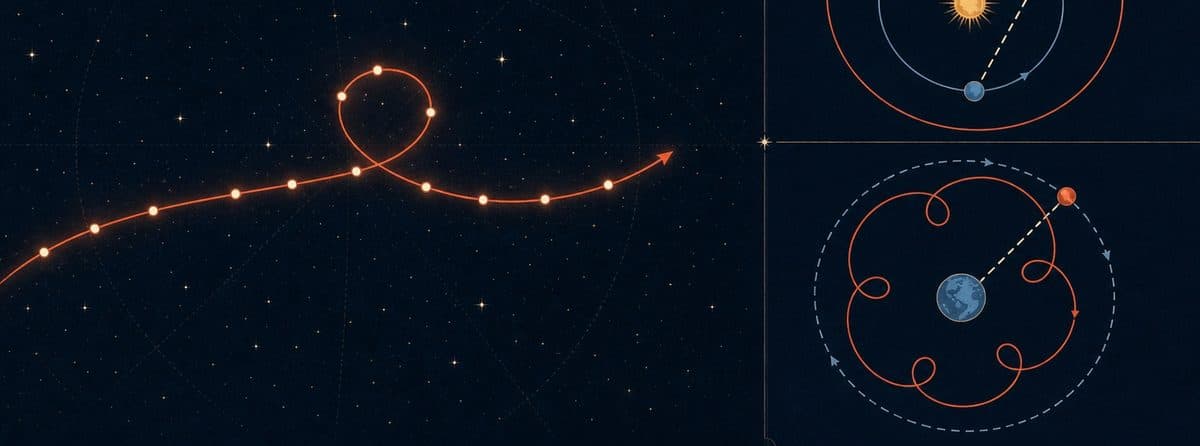
Planetary Motion Lab
Trace Mars across Earth's sky, then compare heliocentric and geocentric explanations.
10¹¹ m · 1.52 AU (Mars's orbit)
Black Hole Simulator
Orbit a ray-traced black hole, watch its accretion disk bend around the shadow, and size the horizon from mass.
10¹³ m · 1.9 × 10¹³ m (M87* horizon)
06 / 06
Workshop
Hands-on air, clay, and collisions, plus a working Windows XP.
7 tools
 New
NewWind Tunnel Simulator
Design an outline, compare airflow, and save your experiment to continue later.
10⁰ m · ≈ 2 m (a test section)
Open the simulatorNACA airfoil generator
10⁰ m · 1 m (a reference airfoil chord)
Reynolds Number Calculator
10⁻¹ m · ≈ 10 cm (an airfoil chord)
Drag force calculator
10⁰ m · ≈ 1 m (a reference length for a 1 m² area)
Pottery Wheel Simulator
10⁻¹ m · ≈ 30 cm (a thrown bowl)
Two-Block Momentum Collision
Send two blocks into a one-dimensional collision and inspect momentum before and after impact.
10⁰ m · ≈ 1 m (a lab track)
Windows XP Simulator
Open a Luna-themed Windows XP desktop. Drag and resize windows, play Minesweeper, type in Notepad, and paint.
10⁰ m · ≈ 40 cm (a CRT screen)
Made in public, one tool at a time.
Tiny to Vast is built by ObservedObserver. Follow along for the next experiment, or watch how the tools are made.