
Venus Simulator
Thin the acid clouds, reduce pressure and cool the surface. Watch water and vegetation respond over time.
10⁷ m · 12,102 km (Venus) · 3D globe · Climate experiment
Loading planetary terrain…
Keep exploring the scale
Every toy changes one assumption. Try another and see what moves.
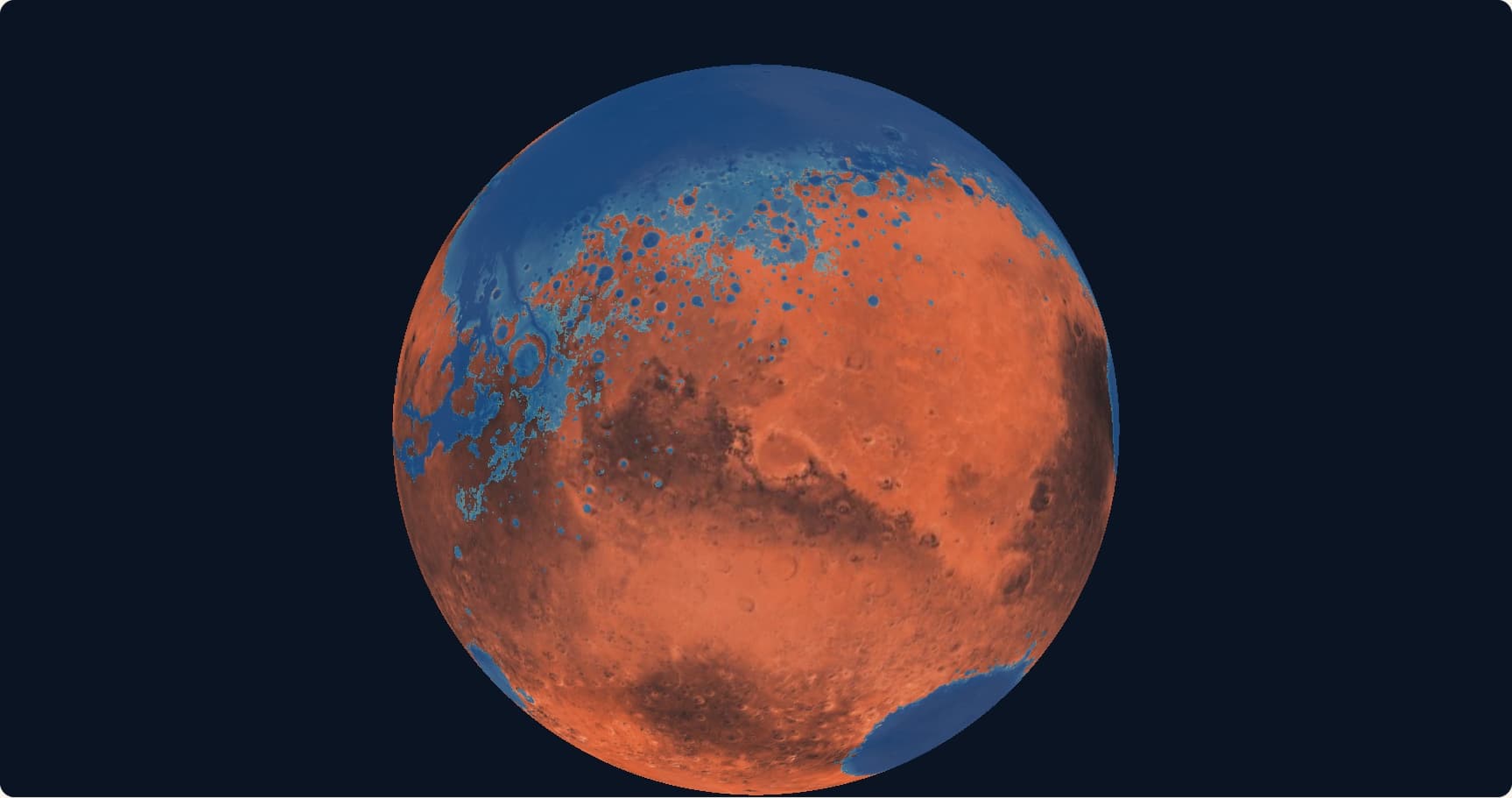
Changing Venus's atmosphere
Venus starts at about 464 °C and 92 bar, with a mainly CO₂ atmosphere and sulfuric acid clouds. The sulfur control removes acid and reduces its replenishment. The gas control reduces both CO₂ and bulk pressure, assuming a replacement buffer atmosphere. Solar shading cools the surface. Removing reflective clouds can add warming in this model, so clearing the sky alone is insufficient.
Supplied water condenses after cooling and freezes below zero. Plants need liquid water, temperatures between 0 and 45 °C, pressure below 3 bar and an acid burden below 15% of the starting value. These are experiment rules, not biological limits. Suitable soil, nutrients and a supporting atmosphere are assumed. Energy, material budgets, oxygen chemistry and climate feedback from oceans or plants are not modeled.
Starting conditions: NASA Venus Fact Sheet. Cloud composition: NASA Venus facts. Cloud images are illustrative; the water clouds reuse Earth imagery from the Mars experiment.
Data and limits
Venus terrain comes from Magellan elevation data. The surface texture is illustrative. Zooming enlarges the same overview data.
Surface and atmosphere textures: Solar System Scope, CC BY 4.0.
Compare other worlds
Venus experiment questions
Can removing sulfuric acid clouds make Venus habitable?
Not by itself. Venus has a dense CO₂ atmosphere as well as sulfuric acid clouds. This experiment requires sulfur capture, pressure reduction and cooling before vegetation can grow. The rates, years and plant thresholds are illustrative, not an engineering forecast.
When can water and vegetation appear on Venus?
Supplied water can condense after cooling, or freeze if the surface becomes too cold. Introduced plants wait for liquid water, mild temperatures, low pressure and little acid. The timeline illustrates these conditions rather than predicting a real terraforming schedule.
Present-day terrain with illustrative climate rules for Venus. Supplied water and vegetation are hypothetical; years do not predict a terraforming schedule.